

Why Your Competitor Ranks #1 With a Worse Website Than Yours
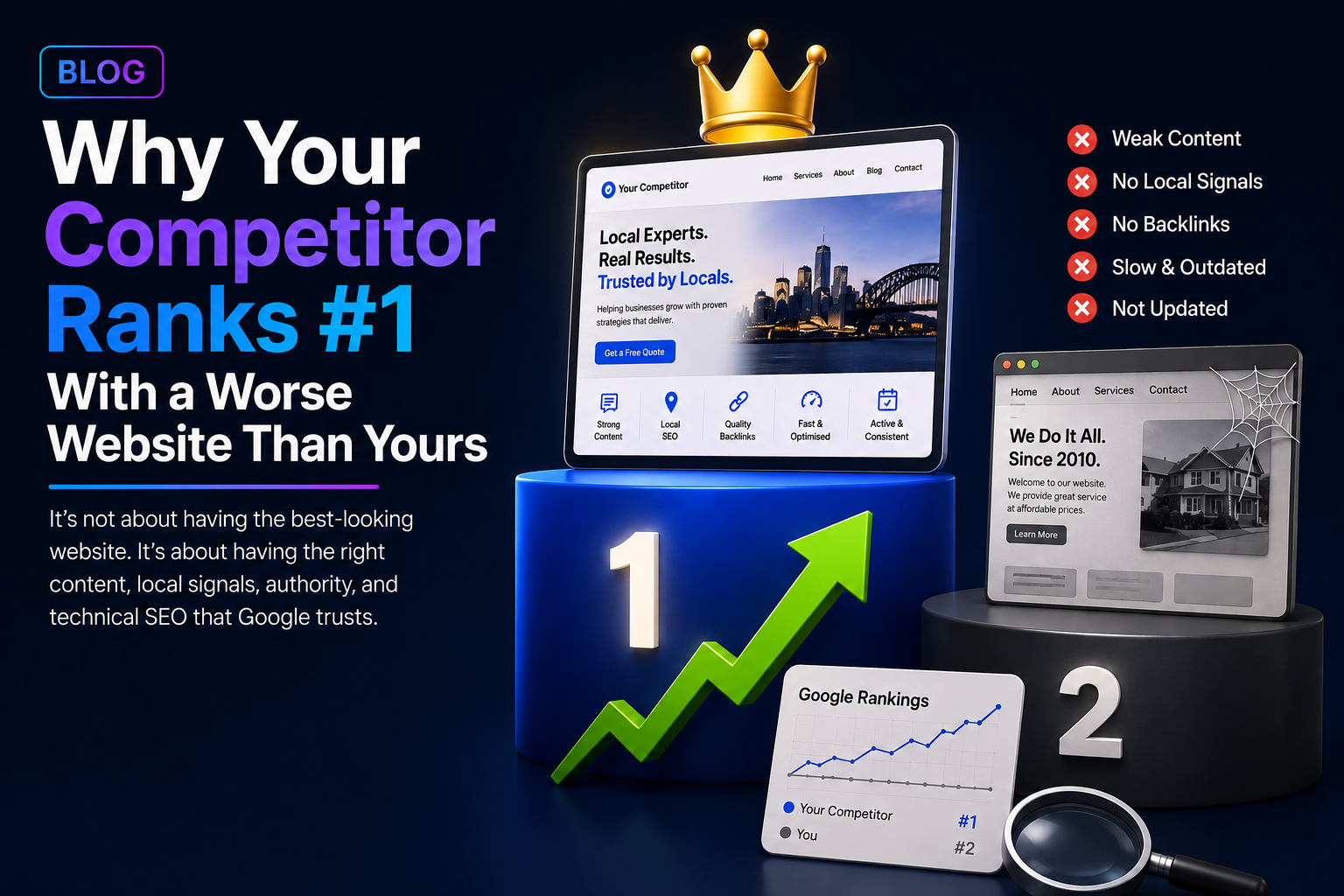
Sometimes it feels personal. You've spent time and money on a clean, modern website, and yet a competitor with a clunky, outdated site is sitting at the top of Google, above you, for the exact keywords you want. It's frustrating, and it's also completely explainable. Google doesn't rank the prettiest website. It ranks the website it trusts the most to answer the searcher's question.
Design Wins Customers. It Doesn't Win Rankings.
A polished website builds trust once someone lands on it, but Google's algorithm can't "see" beautiful the way a human does. It reads code, content, structure, and signals. A dated site with the right technical foundations, the right content, and enough authority behind it will consistently out-rank a stunning site that's missing those fundamentals. If your competitor is beating you despite an inferior-looking site, the real gap is almost always in one of the areas below.
Where Your Competitor Is Actually Winning
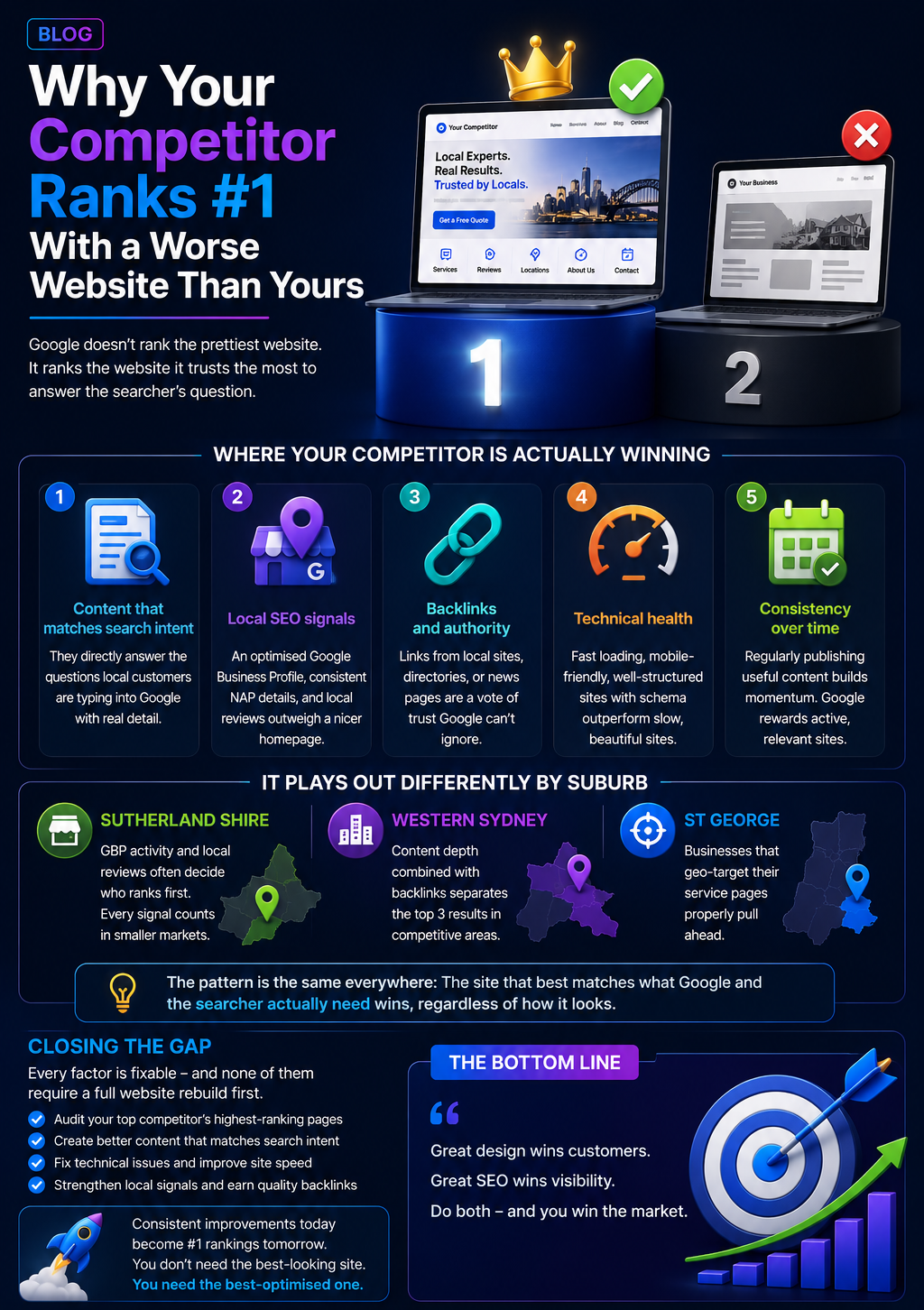
Content that matches search intent. Their pages may directly answer the questions local customers are typing into Google, with real detail, rather than a few generic paragraphs about "quality service."
Local SEO signals. A fully optimised Google Business Profile, consistent name, address and phone details, and local reviews can outweigh a nicer homepage every time, especially for suburb-level searches.
Backlinks and authority. If other local sites, directories, or news pages link back to your competitor, Google reads that as a vote of trust that your design budget can't buy.
Technical health. Page speed, mobile usability, clean site structure, and proper schema markup often matter more than visual polish. A fast, well-structured "ugly" site frequently beats a slow, beautiful one.
Consistency over time.
Competitors who publish new, useful content regularly build momentum. Google rewards sites that keep proving they're active and relevant, not ones that launched once and went quiet.
It Plays Out Differently by Suburb
Local ranking gaps show up differently depending on where you're competing. In the
Sutherland Shire, strong Google Business Profile activity and local reviews often decide who ranks first, since search volumes are smaller and every signal counts. Across
Western Sydney, including Parramatta, Penrith and Liverpool, competition is fiercer and content depth combined with backlinks tends to separate the top three results. In St George, businesses that geo-target their service pages properly, rather than relying on one generic "about us" page, are the ones pulling ahead. The pattern is the same everywhere: the site that best matches what Google and the searcher actually need wins, regardless of how it looks.
Closing the Gap
The good news is that every one of these factors is fixable, and none of them require a full website rebuild first. Start by auditing what your top competitor is doing on their highest-ranking pages, then build content, technical fixes, and local signals to match and exceed them. We break this down further in
Is SEO Worth It for a Small Business?, and if lead volume rather than rankings alone is the real goal, our
lead generation services page covers how we turn visibility into enquiries. If you'd like a straight answer on why a specific competitor is outranking you,
get in touch and we'll show you exactly what's driving their result.
Frequently Asked Questions
Why does a worse-looking website outrank mine on Google?
Google's ranking algorithm evaluates content relevance, technical performance, local signals, and backlinks, not visual design. A less attractive site that satisfies these factors better will typically outrank a more polished one.
Does website design affect SEO rankings at all?
Indirectly, yes. Design affects user experience metrics like time on page and bounce rate, and a slow or confusing layout can hurt technical SEO. But design alone won't move you past a competitor who's stronger on content, authority, and local signals.
How long does it typically take to outrank a competitor?
It depends on how far ahead they are and how competitive your suburb or industry is. Local, lower-competition areas can shift in a few months with consistent work, while more competitive markets like Western Sydney or the Sydney CBD often take longer.
What's the fastest way to start closing the ranking gap?
Start with a competitor audit: compare their top-ranking pages against yours for content depth, page speed, and backlinks, then fix your Google Business Profile and on-page content first, since those changes tend to show results quickest.
More Digital Marketing Tips, Tricks & Tools