
Western Sydney SEO: A Suburb-by-Suburb Guide to Where the Competition Actually Is
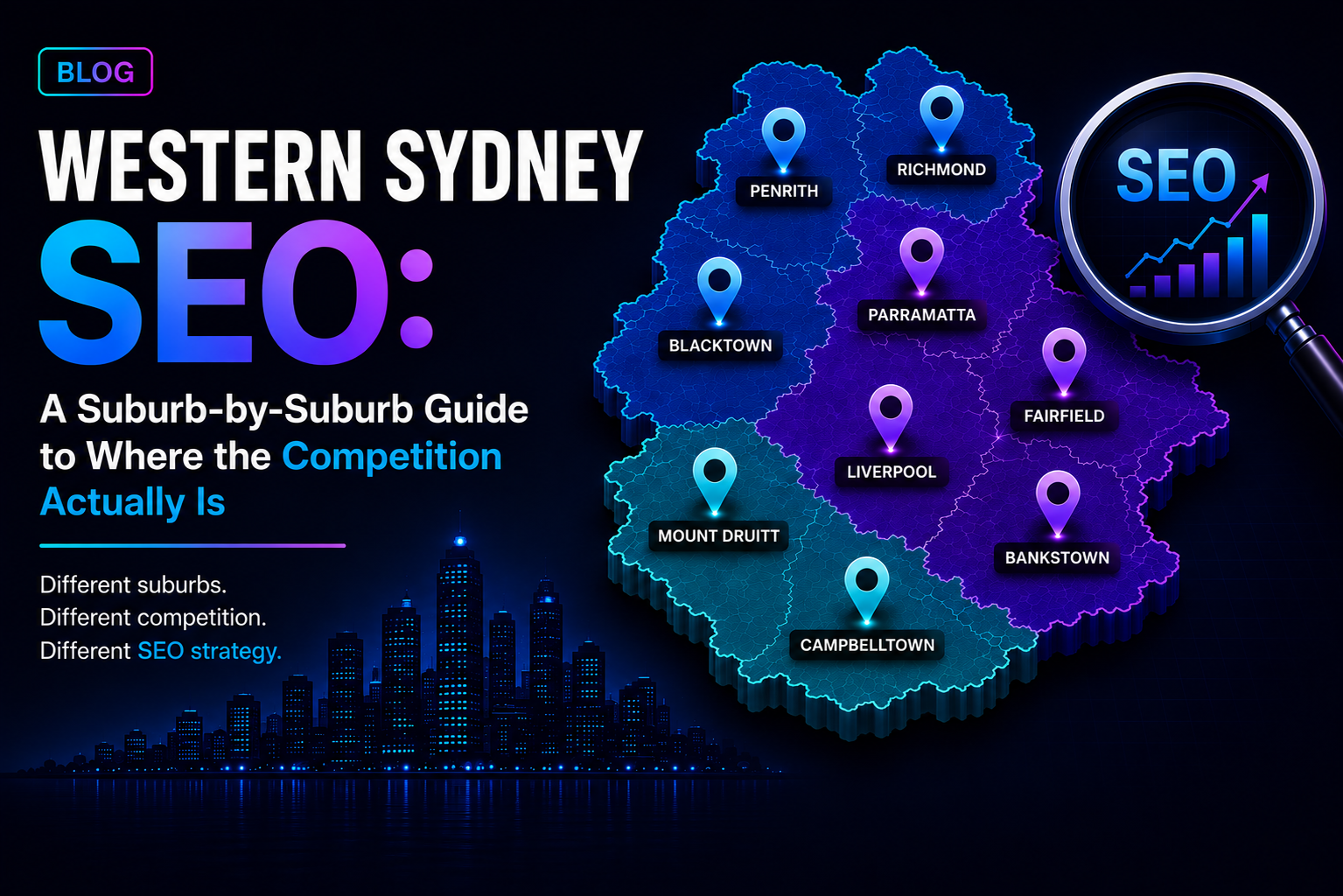
"Western Sydney" is not one search market. It is closer to ten separate ones stitched together under a single label, and most local SEO advice treats it like a single suburb with a single level of difficulty. That is why so many Western Sydney business owners get frustrated: they read a generic local SEO checklist, follow it properly, and still can't move the needle because the checklist was never built for how differently ranked their specific corridor actually is.
Parramatta and Mount Druitt are both technically Western Sydney. So are Penrith and Fairfield. But the number of competitors fighting for the same Google Business Profile map pack, the density of established agencies already targeting those suburbs, and the volume of "near me" searches all vary enormously between them. Before you spend another dollar on content or backlinks, it is worth understanding which kind of market you are actually competing in.
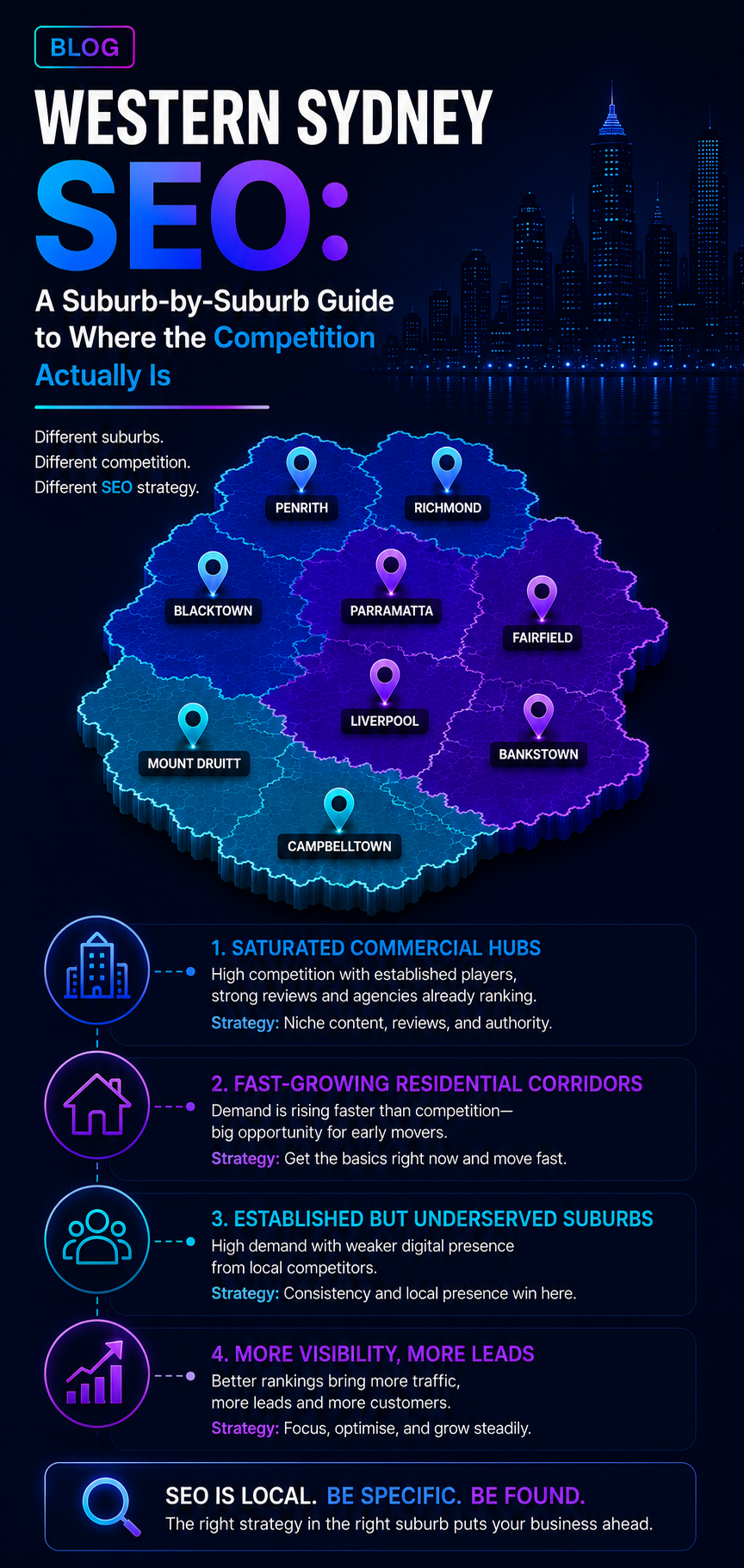
The Three Types of Western Sydney Market
1. The saturated commercial hubs — Parramatta, Blacktown
Parramatta functions as a second CBD, and Blacktown is one of the fastest-growing council areas in the state. Both attract national franchises, well-funded local competitors, and agencies that have been building authority in these suburbs for years. Ranking here on generic service terms alone is genuinely hard the map pack is crowded, and the organic results are dominated by sites with years of backlinks and review volume behind them. The way in is rarely a head-on attack on "[service] Parramatta"; it is usually through tightly targeted suburb and street-level content the bigger players haven't bothered writing, combined with a review velocity that outpaces theirs month on month.
2. The fast-growing residential corridors — Marsden Park, Box Hill, Oran Park, The Ponds
New estates like these are where the real opportunity sits right now. Thousands of new households move in before the local service market has caught up, which means search volume for tradies, clinics, childcare and other essentials is climbing faster than the competition. A Google Business Profile claimed early, with consistent NAP data and a handful of genuine reviews from new residents, can outrank businesses with a decade more history simply because almost nobody else has bothered to optimise for these suburb names yet.
3. The established but underserved suburbs — Mount Druitt, St Marys, Fairfield, Liverpool
These are large, long-settled populations where demand is high but digital investment from local competitors has historically lagged. It is common to find businesses here with no Google Business Profile posts in over a year, thin or duplicated website content, and review counts stuck well below what the population would justify. That gap is an opening. A modest, consistently maintained local SEO presence can look disproportionately strong next to competitors who haven't touched their listing since it was created.
How to Work Out Which Category You're In
You don't need expensive tools to get a rough read on your own suburb. Three checks will tell you most of what you need to know:
- Search your core service plus your suburb name from a phone on mobile data, and count how many map pack listings have 50+ reviews. Above five or six, you're in a saturated hub.
- Check how recently your top three competitors posted a Google Business Profile update or added new reviews. Silence for months is a sign of an underserved market.
- Look at whether competitor websites have suburb-specific pages or just one generic "service area" page covering all of Western Sydney. Generic pages are easier to outrank with genuinely local content.
Why This Changes Your Strategy, Not Just Your Content
This matters because the fix is different for each category. In a saturated hub, content and reviews alone rarely move you past established players; you also need technical and structural SEO work to compete on the same footing. In a growing corridor, speed matters more than sophistication; getting the basics right before competitors arrive beats a perfect campaign six months from now. In an underserved suburb, consistency is the entire game; a business that simply keeps showing up will usually beat one that set up its listing once and never returned.
This is also why a single, generic "Western Sydney" landing page rarely performs as well as it should. Our own Western Sydney service page exists as the front door, but the real ranking work happens at the suburb level, through local search optimisation built around the specific competitive picture in each area rather than a one-size-fits-all approach.
If you're not sure which category your suburb falls into, or you've been investing in SEO without seeing it translate into
leads, it's worth getting an outside read on the local landscape before spending further.
Get in touch and we'll map out exactly where your suburb sits and what's realistic to achieve there.
Frequently Asked Questions
Why does my SEO work well in one Western Sydney suburb but not another?
Because competition levels vary hugely across Western Sydney. A strategy that works in an underserved suburb like Mount Druitt or St Marys may barely register in a saturated hub like Parramatta, where established competitors have years of reviews and backlinks behind them.
Should I target one suburb or the whole Western Sydney region?
Start with the suburbs where you actually want jobs to come from, and build genuinely local content and Google Business Profile activity for each. A single generic "Western Sydney" page rarely outranks competitors who have gone suburb-specific.
Is it worth targeting new estates like Marsden Park or Oran Park before they're fully built out?
Often yes. Search demand tends to grow faster than local competition in new estates, so an early, consistent presence can establish rankings before larger competitors turn their attention there.
How do I know if my suburb is underserved or saturated?
Search your service plus your suburb on mobile, count map pack listings with strong review volume, and check how recently competitors have updated their Google Business Profile. Stale, generic listings usually mean there's room to move.
More Digital Marketing Tips, Tricks & Tools