
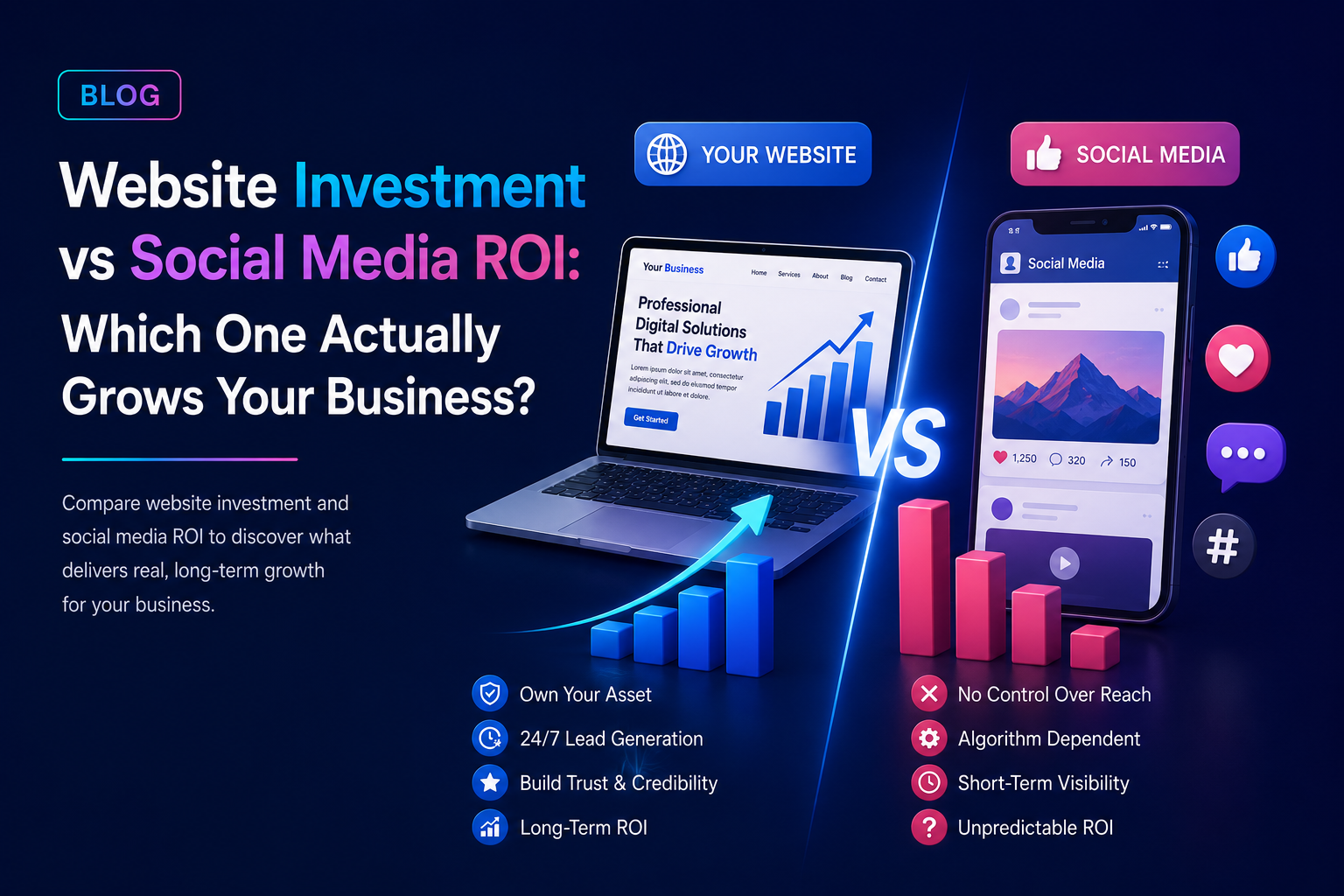
Website Investment vs Social Media ROI: Which One Actually Grows Your Business?
Businesses are constantly searching for new ways to attract customers, generate leads, and stay ahead of their competitors. Social media platforms are filled with success stories about viral posts, thousands of followers, and growing online communities. At the same time, many businesses are investing heavily in websites, SEO, and content marketing to increase their online presence.
This often leads to one important question:
Should you invest more in social media or your website?
While social media is an excellent tool for building awareness and connecting with potential customers, many businesses discover that their website delivers a much stronger return on investment (ROI) over the long term. Understanding the role of both can help you make smarter marketing decisions and achieve sustainable business growth.
The Power of Social Media
There is no denying the impact social media has had on modern marketing. Platforms such as Facebook, Instagram, LinkedIn, TikTok, and YouTube allow businesses to reach large audiences quickly and engage with customers in real time.
Social media offers several advantages:
- Increased brand awareness
- Direct communication with customers
- Easy content sharing
- Community building
- Quick promotion of products and services
A well-crafted social media post can generate significant attention in a short amount of time. Businesses can showcase their expertise, share customer success stories, and build relationships with their audience.
However, while social media is excellent for visibility, visibility alone does not always lead to conversions.
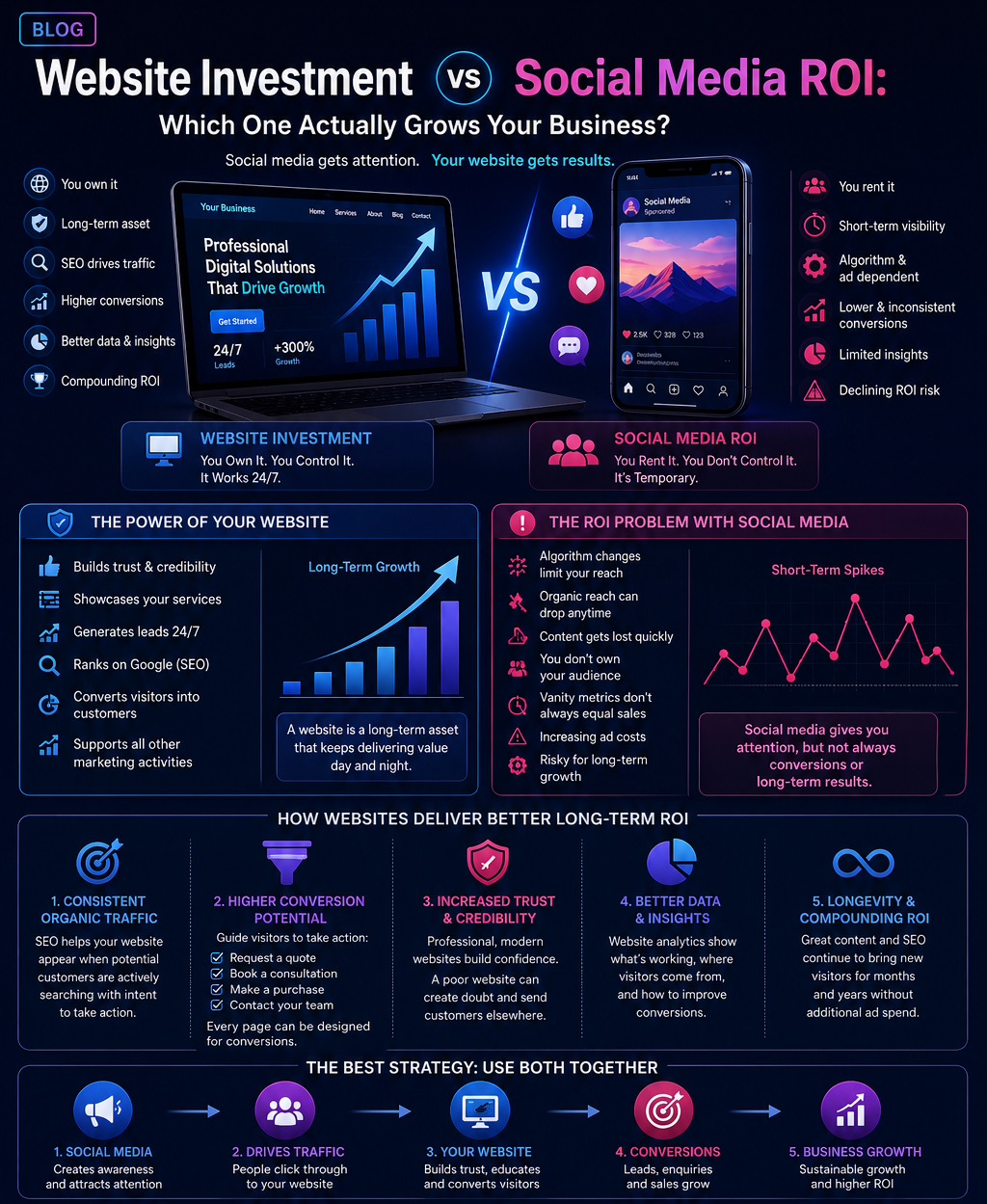
The Roi Problem with Social Media
Many businesses become obsessed with vanity metrics such as likes, comments, shares, and follower counts. While these metrics may look impressive, they don't always translate into enquiries, sales, or long-term growth.
Let’s be honest:
social platforms are rented space. You don’t control the algorithm, the ad costs, or even the visibility of your own followers. The reality is that social media platforms are constantly changing. Algorithms determine who sees your content, organic reach can decline without warning, and yesterday's popular post can quickly disappear into an endless stream of new content. That's why relying solely on social media can be risky for businesses looking for sustainable growth.
Why Your Website Can Deliver Compounding ROI
Unlike social media platforms, your website belongs entirely to your business. You control the content, design, user experience, and customer journey. Every improvement you make contributes to a long-term asset that continues working for your business day and night.
Websites aren’t just digital brochures; they’re conversion engines. A well-built website can:
- Generate leads 24/7
- Build trust and credibility
- Showcase your services
- Rank on Google through SEO
- Convert visitors into customers
- Support all other marketing activities
Your website becomes the central hub of your
online presence and often serves as the first place potential customers visit before making a purchasing decision. Websites also support retargeting ads. You can build warm audiences based on actual interest—not guesswork.
How Websites Deliver Better Long-Term ROI
One of the biggest advantages of investing in your website is longevity.
A social media post may generate attention for a few days before being forgotten. A well-optimised website page or blog article can continue attracting visitors for months or even years.
For example, imagine publishing a blog that ranks on Google for a keyword your customers regularly search for. Every month, that content can bring new visitors to your website without requiring additional advertising spend.
This is where website ROI becomes particularly powerful.
Benefits include:
Consistent Organic Traffic
Search engine optimisation helps your website appear when potential customers are actively searching for products or services. Unlike social media users who are scrolling for entertainment, search engine users often have a clear intent to take action.
Higher Conversion Potential
Your website allows you to guide visitors towards specific actions such as:
- Requesting a quote
- Booking a consultation
- Making a purchase
- Contacting your team
Every page can be designed with conversion goals in mind.
Increased Trust and Credibility
Today's consumers expect legitimate businesses to have professional websites. An outdated or poorly designed website can create doubt, while a modern and informative website builds confidence and trust.
Better Data and Insights
Website analytics provide valuable information about visitor behaviour, traffic sources, conversions, and customer interests. This allows businesses to make informed marketing decisions and continually
improve performance.
Own the Platform, Own the Profit
Social is where attention begins. Your website is where trust and transactions are built. At the end of the day, your website isn’t just a marketing tool; it’s a strategic asset. A professionally designed website provides a foundation for long-term success. It supports
SEO,
advertising campaigns, content marketing, email marketing, and
social media efforts while continuing to generate value over time.
Frequently Asked Questions
Is social media better than having a website?
No. Social media helps increase visibility, while a website provides credibility, lead generation, and long-term business value.
Should small businesses prioritise their website?
In most cases, yes. A strong website forms the foundation of all digital marketing efforts and supports sustainable business growth.
Can social media replace a website?
No. Social media is a marketing channel, while a website serves as your business's central online hub and conversion platform.
What is the best approach for business growth?
The most effective strategy is using social media to attract attention and a professionally optimised website to convert visitors into customers.
More Digital Marketing Tips, Tricks & Tools