
How Long Does SEO Take to Work for a Small Business?
It is the question almost every small business owner asks before investing in search: how long until SEO actually works? It is a fair thing to want to know. You are spending money now and you want a realistic idea of when the enquiries will start to flow.
The honest answer is that most small businesses see early movement within three to six months and meaningful results between six and twelve months. At
Leads 4 Business, we set clear expectations from day one and back our
SEO strategies and
local search optimisation with realistic timelines rather than empty promises. Here is what the journey usually looks like.
Why SEO Is Not Instant
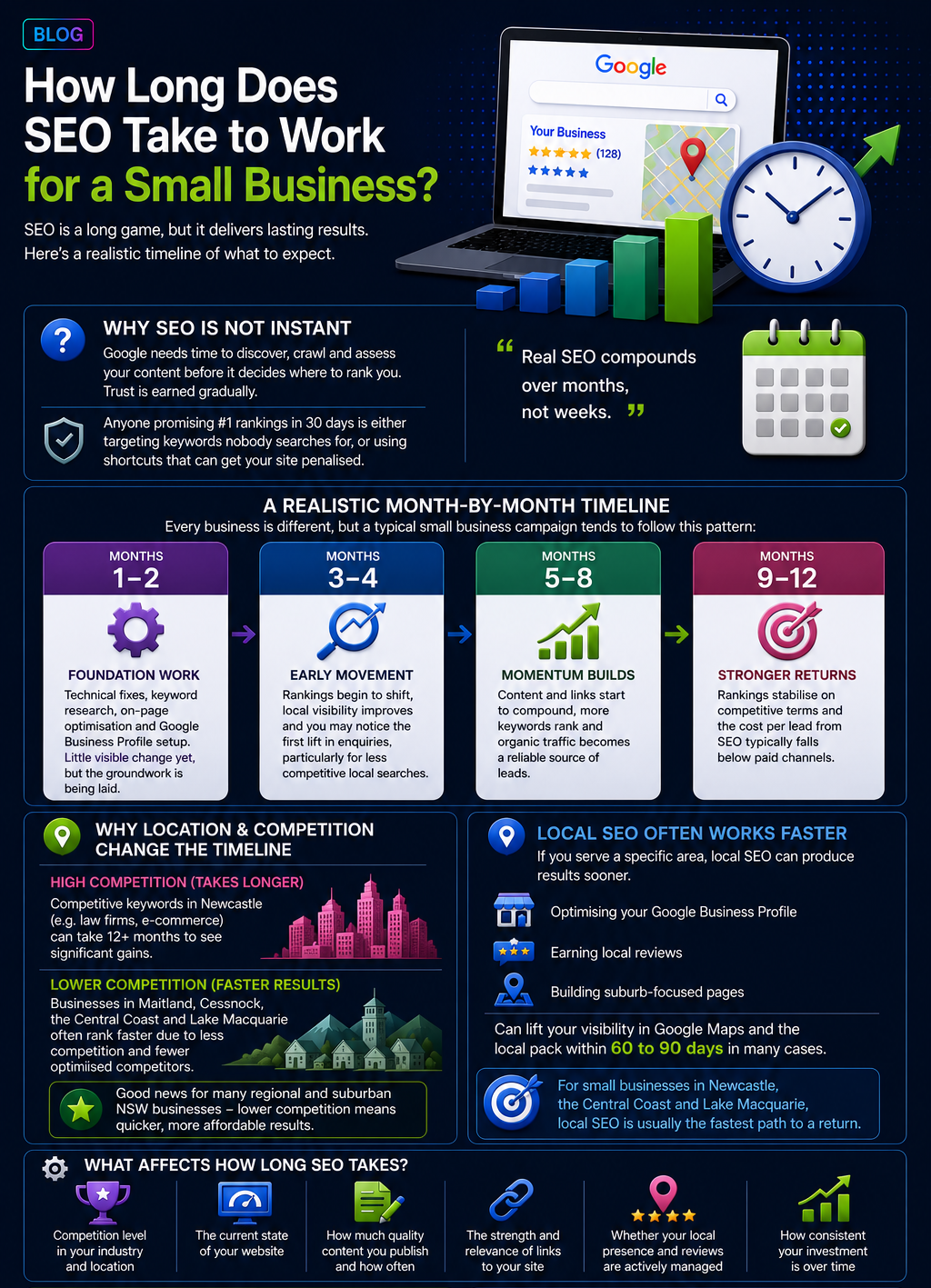
SEO takes time because Google needs to discover, crawl and assess your content before it decides where to rank you. Trust is earned gradually. A new or recently improved page does not jump to the top overnight, no matter how good it is. Google watches how users respond, how your site compares to competitors and whether your authority is growing.
Anyone promising first-page rankings in 30 days is either targeting keywords nobody searches for or relying on shortcuts that can get your site penalised. Real SEO compounds over months, not weeks.
A Realistic Month-by-Month Timeline
Every business is different, but a typical small business campaign tends to follow this pattern:
- Months 1 to 2: Foundation work. Technical fixes, keyword research, on-page optimisation and Google Business Profile setup. Little visible change yet, but the groundwork is being laid.
- Months 3 to 4: Early movement. Rankings begin to shift, local visibility improves and you may notice the first lift in enquiries, particularly for less competitive local searches.
- Months 5 to 8: Momentum builds. Content and links start to compound, more keywords rank and organic traffic becomes a reliable source of leads.
- Months 9 to 12:
Stronger returns. Rankings stabilise on competitive terms and the cost per lead from SEO typically falls below paid channels.
Why Location and Competition Change the Timeline
Where your business operates makes a real difference to how quickly SEO works. Competition is not the same in every market across NSW.
A business chasing competitive keywords in Newcastle, such as an established law firm or a city e-commerce store, can take twelve months or more to see significant gains because it is up against competitors with years of SEO behind them. By contrast, a tradie in Maitland, a clinic on the Central Coast or a service business in Cessnock often ranks faster simply because the local field is smaller and less aggressively optimised.
This is good news for many regional and suburban NSW businesses. Lower competition frequently means quicker, more affordable results.
Local SEO Often Works Faster
If you serve a specific area, local SEO can produce results sooner than broad, national SEO. Optimising your Google Business Profile, earning local reviews and building suburb-focused pages can lift your visibility in Google Maps and the local pack within 60 to 90 days in many cases.
For small businesses in places like Newcastle, the Central Coast and Lake Macquarie, local SEO is usually the fastest path to a return because so many customer searches carry local intent.
What Affects How Long SEO Takes
The main factors that influence your timeline are:
- Competition level in your industry and location
- The current state of your website, including its age, speed and technical health
- How much quality content you publish and how often
- The strength and relevance of links pointing to your site
- Whether your local presence and reviews are actively managed
- How consistent your investment is over time
Final Thoughts
SEO is a long game, but a winnable one. For most small businesses in NSW, the first few months are about building foundations, with real momentum arriving from month three to six and stronger returns from six to twelve months. The key is consistency. If you would like a realistic timeline tailored to your business and location, the team at
Leads 4 Business can map it out for you.
Contact us to get started.
Frequently Asked Questions
How long does SEO take to show results?
Most small businesses see early movement in three to six months and meaningful, sustained results between six and twelve months, depending on competition.
Why does SEO take so long?
Google needs time to crawl, assess and trust your site. Rankings build gradually as your content and authority grow, which is why results compound over months.
Is SEO faster in smaller Hunter towns than in Newcastle?
Often, yes. Lower competition in areas like Maitland, Cessnock and the Central Coast can mean faster, more affordable ranking improvements than the more competitive Newcastle market.
Can I speed up SEO results?
Consistent content, strong technical health and active
local search optimisation all help. Pairing SEO with paid ads can also bring short-term enquiries while SEO builds.
More Digital Marketing Tips, Tricks & Tools