
SEO Reports Explained: Which Numbers Matter and Which Are Vanity Metrics
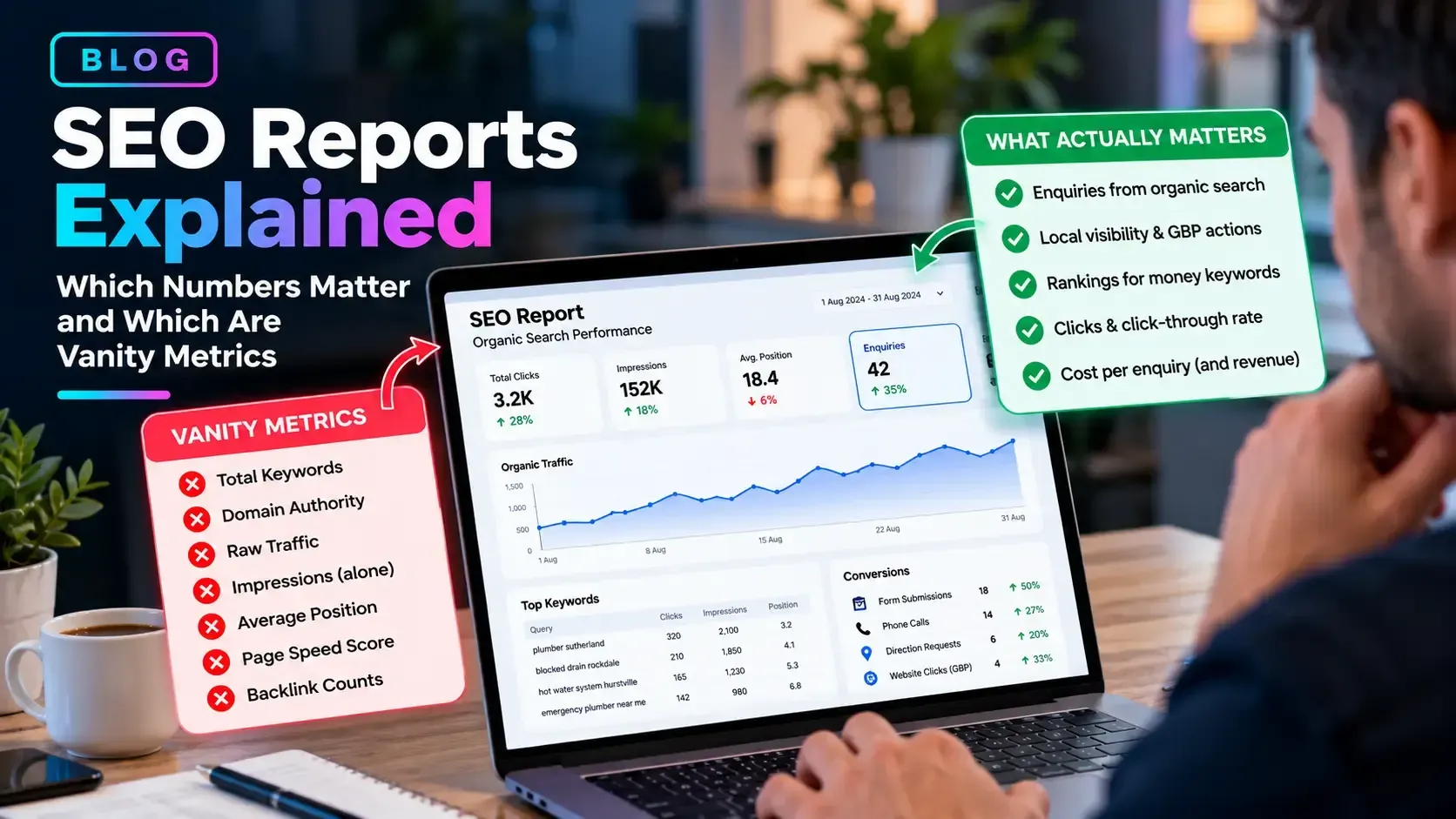
Imagine your SEO report arrives on the first of the month. Traffic is up, hundreds of new keywords are ranking, and your domain score has crept up two points. Every arrow is green. Then you check the number that actually pays the bills, your enquiries, and it hasn't moved.
That gap between a great-looking report and a quiet phone is one of the most common frustrations we hear from business owners. It usually isn't a sign that SEO doesn't work. It's a sign the report is measuring the wrong things.
Why Reports Drift Toward Vanity
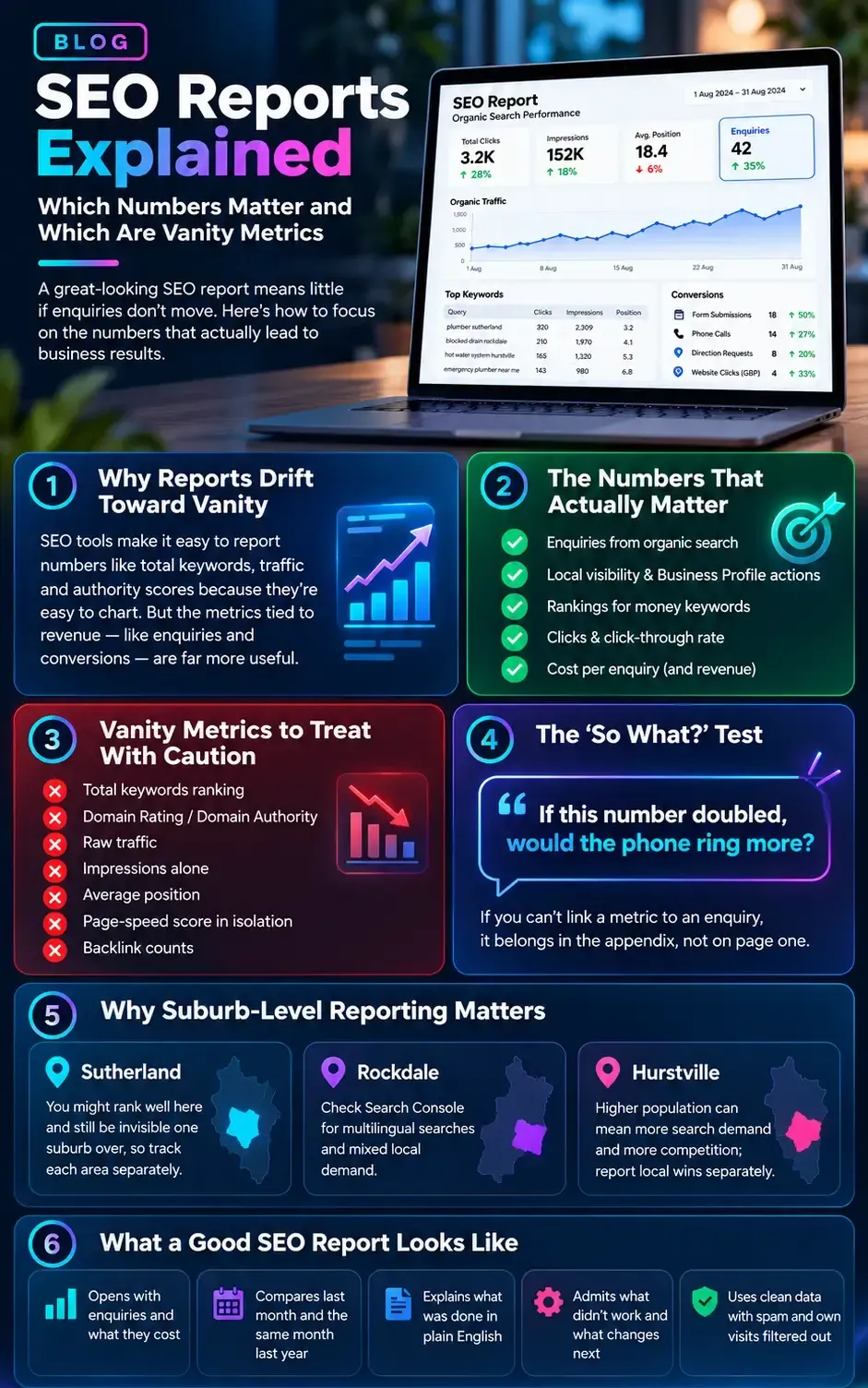
SEO tools hand out certain numbers freely, and those numbers tend to go up. Total keywords, visitor counts and authority scores are easy to pull, easy to chart and hard to argue with. The numbers that tie SEO to revenue take more effort to set up, and they are far less flattering in a slow month. A good report favours the second kind.
The Numbers That Actually Matter
Enquiries from organic search. Form submissions, phone calls, click-to-call taps, and quote requests that came through search, and ideally how many turned into paid jobs. This is the number everything else should lead back to.
Local visibility and Business Profile actions. Calls, direction requests, and website clicks from your Google Business Profile, plus whether you appear in the map pack for your core services in the suburbs you want to work from.
Rankings for money keywords. A short, agreed list of service-plus-suburb searches that match what you actually sell, not a count of every term your site touches.
Clicks and click-through rate in Search Console. Real people choosing your result, tracked as a trend and broken down by query so you can see what is driving them.
Cost and return.
Cost per enquiry and, where it can be tracked, the revenue that organic search is producing.
The Vanity Metrics to Treat With Caution
These aren't always useless, but on their own they flatter more than they inform:
- Total keywords ranking. Many are obscure long-tail terms or sit on page three, where few people look.
- Domain Rating or Domain Authority. These are third-party estimates, not a score Google uses. They're handy for comparing against competitors, not a goal in themselves.
- Raw traffic. A thousand visitors from outside your service area are worth less than fifty from inside it.
- Impressions alone. Being seen is not the same as being chosen.
- A single average position. It blends brand searches with everything else and hides how differently you rank from suburb to suburb.
- A page-speed score in isolation. A lab score isn't the same as how real visitors experience your site or whether faster pages lift enquiries.
- Backlink counts. A few relevant local links are worth more than many irrelevant ones.
A Simple Test: The "So What?" Question
For every number in a report, ask: if this doubled, would the phone ring more? If you can't draw a line from the metric to an enquiry, it belongs in an appendix, not on page one.
What a Good SEO Report Looks Like
- It opens with enquiries and what they cost, before any ranking chart.
- It compares against last month and the same month last year, so seasonality doesn't fool you.
- It explains what was done and why, in plain English.
- It admits what didn't work and what changes next month.
- It uses clean data, with spam submissions and your own visits filtered out.
If your current report is full of green arrows but light on enquiries, it's worth a second opinion. Our
SEO and
local search optimisation reporting starts with the numbers that connect to
lead generation.
Get in touch and we'll review your latest report and show you what matters.
Frequently Asked Questions
How often should I receive an SEO report?
Monthly is standard. Because SEO takes time to show results, judge performance on trends over several months rather than week-to-week movement.
Is Domain Authority worthless?
Not worthless, but it isn't a metric Google uses. It's useful for benchmarking against competitors, not as a target to chase.
My traffic is up, but my enquiries are flat. What's wrong?
Often the extra visitors are the wrong audience, such as people outside your area or looking for information rather than a service. Check which pages bring the traffic, where visitors are located, and whether your forms and phone number are easy to use.
What should I ask my agency to include in the report?
Enquiries by source, Business Profile calls and direction requests, rankings for an agreed list of service-plus-suburb keywords, cost per enquiry, and a plain-English summary of the work done.
More Digital Marketing Tips, Tricks & Tools