
A Practical Guide to Website Development for Australian Small Businesses in 2026
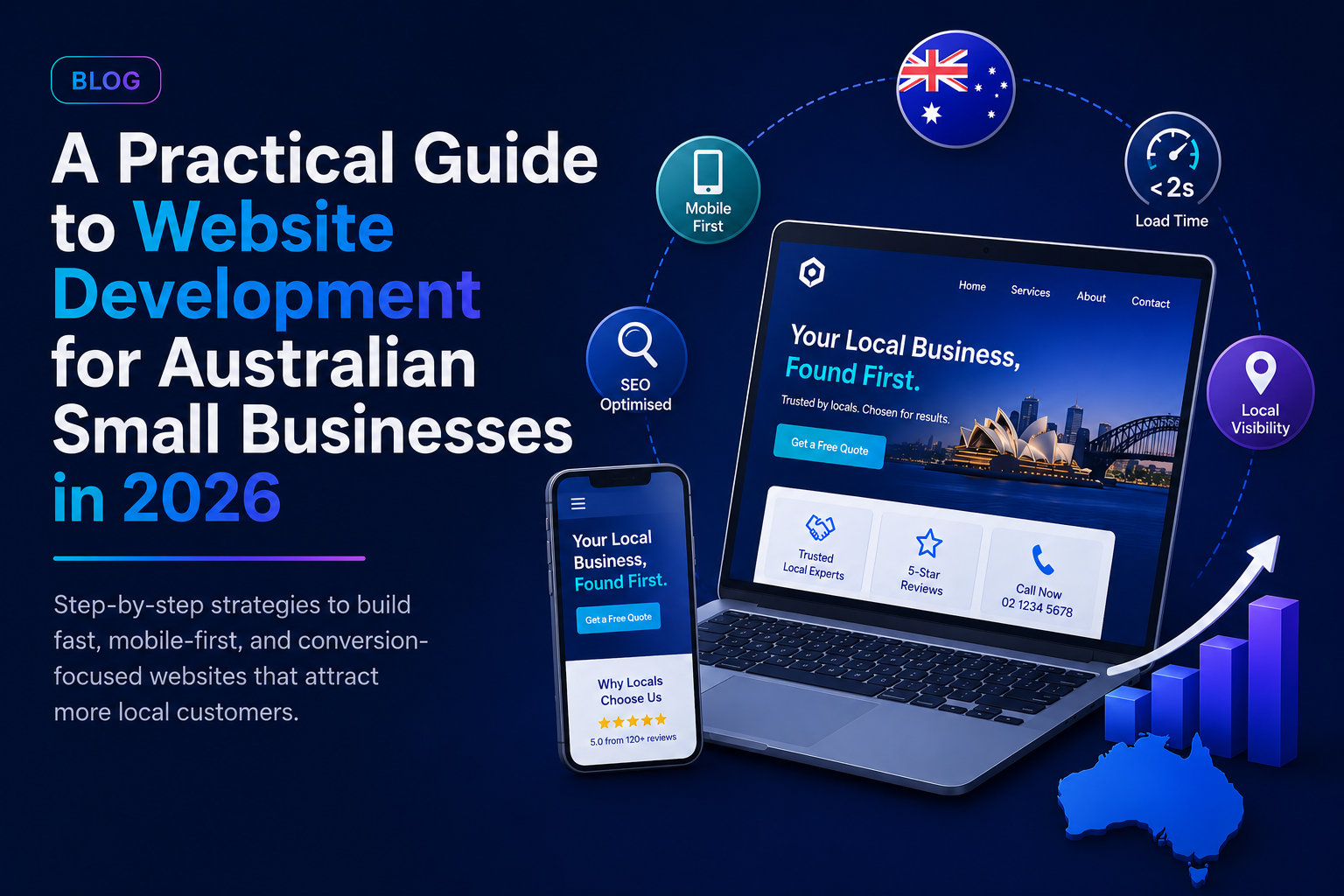
If your website still looks like it was built for a different decade, you're not just losing style points; you're losing customers. In 2026, an Australian small business website has about three seconds to convince a visitor to stay, trust you, and take action. That's not a lot of runway, which is exactly why "just having a website" stopped being enough years ago.
Whether you're a tradie in
Western Sydney, a café owner in the
Sutherland Shire, or a dental clinic in
St. George, here's what actually matters when building (or rebuilding) your website this year minus the jargon.
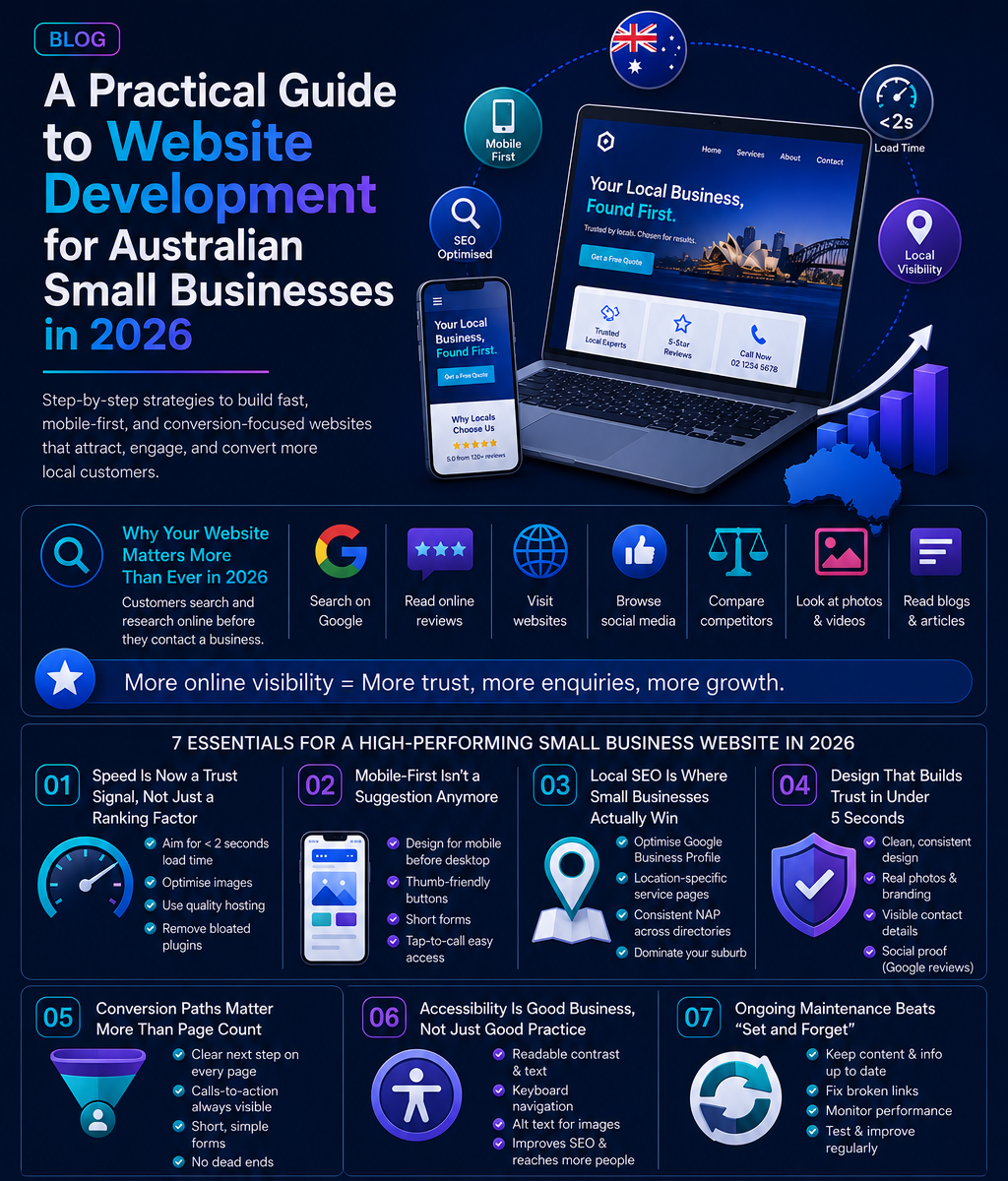
1. Speed Is Now a Trust Signal, Not Just a Ranking Factor
Google has cared about page speed for years, but in 2026 your customers care just as much. A slow-loading site doesn't just hurt your search ranking; it silently tells visitors, “This business doesn't sweat the details." Compress your images, ditch bloated plugins, and choose hosting that doesn't buckle under a Saturday morning traffic spike. Aim for a load time under two seconds. Every extra second past that costs you real conversions.
2. Mobile-First Isn't a Suggestion Anymore
More than three-quarters of local searches in Australia now happen on a phone, often from someone standing outside your competitor's shopfront comparing prices. If your site isn't built mobile-first, meaning designed for the phone screen before the desktop, you're fighting an uphill battle. Buttons should be thumb-friendly, forms should be short, and your phone number should be one tap away, not buried in a footer.
3. Local SEO Is Where Small Businesses Actually Win
You don't need to outrank national brands for broad search terms; you need to dominate your suburb. That means a properly optimised
Google Business Profile, location-specific service pages (think "electrician in Parramatta" rather than just "electrician"), and consistent NAP (name, address, phone) details across every directory you're listed on.
Local SEO is the single highest-leverage investment most NSW small businesses can make in 2026
4. Design That Builds Trust in Under 5 Seconds
Visitors judge credibility almost instantly, largely based on visual design. A clean layout, a consistent colour palette, professional typography, and real photos (not stock images of people in suspiciously perfect blazers) all signal legitimacy. Add genuine touches, real client results, visible contact details, and social proof like Google reviews, and you turn a sceptical browser into an enquiry.
5. Conversion Paths Matter More Than Page Count
A beautiful website that doesn't generate leads is an expensive brochure. Every page should have a clear next step: call now, book a quote, or
send an enquiry. Contact forms should ask for the bare minimum, calls-to-action should be visible without scrolling, and there should never be a dead end where a visitor ready to
generate leads for your business doesn't know what to do next.
6. Accessibility Is Good Business, Not Just Good Practice
Building with accessibility in mind -readable contrast, keyboard navigation, and alt text on images doesn't just help visitors with disabilities. It improves your SEO, widens your customer base, and future-proofs your site against evolving standards. It's one of the easiest wins that most small business sites still skip.
7. Ongoing Maintenance Beats "Set and Forget"
A website isn't a one-off project; it's a living asset. Broken links, outdated service info, and stale content quietly erode both trust and search rankings. Businesses that treat their site as an ongoing part of their marketing, reviewing performance, refreshing content, and testing new sections consistently outperform those who built a site once and never looked back.
The Bottom Line
Website development in 2026 isn't about chasing trends; it's about removing friction between a curious visitor and a paying customer. Speed, mobile experience, local relevance, and clear calls to action aren't nice-to-haves anymore; they're the baseline. Get those right, and your website stops being a digital business card and starts being your hardest-working salesperson.
Frequently Asked Questions
How much should a small business website cost in Australia in 2026?
Costs vary widely depending on complexity, but most small NSW businesses can expect a professional, conversion-focused website to range from a few thousand dollars for a solid starter build to significantly more for custom functionality, e-commerce, or advanced integrations. The key question isn't "how cheap" but "how much will this site earn me back".
Do I really need a mobile-optimised website if most of my customers call rather than browse online?
Yes. Even customers who ultimately call you often research on their phones first, checking reviews, comparing services, and confirming you're legitimate before dialling. A poor mobile experience can lose that customer before they ever pick up the phone.
How long does it take to build a new business website?
A straightforward small business website typically takes two to six weeks from planning to launch, depending on the number of pages, content readiness, and revision rounds. More complex builds with custom features can take longer.
Is SEO something I set up once, or does it need ongoing work?
Local SEO is ongoing. Search algorithms change, competitors update their listings, and your business itself evolves: new services, new locations, new reviews. Treating SEO as a one-time task is one of the most common (and costly) mistakes small businesses make.
More Digital Marketing Tips, Tricks & Tools